
Veja também


 25.09.2026 07:11 AM
New York Fed President John Williams said today that there is still much work to do on inflation, given high energy prices and AI-driven demand. He called the market view that another hike this year is reasonable, while adding that the Fed should "wait and see." Williams said the US economy has shown remarkable resilience to large shocks and the labor market remains strong, but risks to inflation persist from the ongoing US–Iran war and very strong AI-related demand.
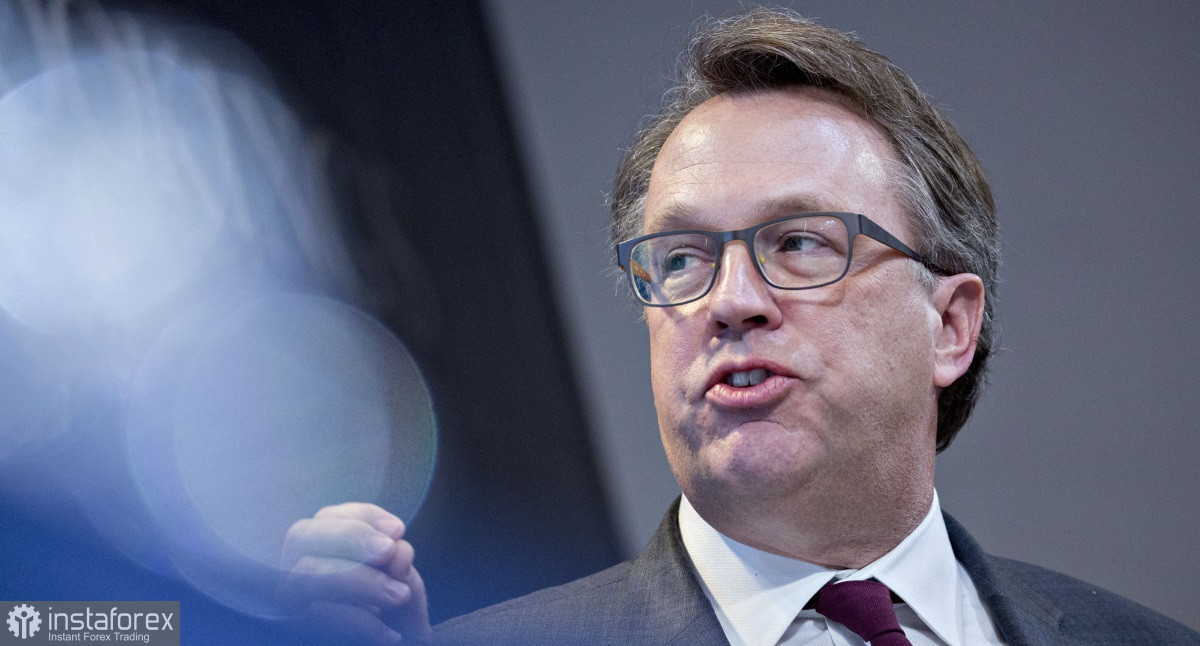
Williams said on Thursday in London that there is still a lot of work to do, noting that inflation has remained above target for five years. US inflation in August held at 3.4%, and the core measure (excluding food and energy) rose more than expected month-on-month — data that helped build the case for last week's rate hike.
Williams' remarks fit into a clear string of similar comments from Fed officials over recent days. Richmond Fed President Tom Barkin warned earlier that supply shocks may take time to fade and could embed higher prices. Boston Fed President Susan Collins said she is among the committee members penciling in a second hike this year. And Fed Governor Michael Barr said further hikes are likely necessary to bring inflation back to the 2% target. The logic is straightforward: the more voices inside the Fed speak in the same hawkish key, the less reason the market has to price a pause in the tightening cycle — and it is this rising unanimity of rhetoric, not any single speech, that has been the main driver for the dollar recently.
The dollar is the primary beneficiary of that sequence. Each new confirmation that the committee remains set on tightening strengthens expectations for a longer period of higher rates in the US relative to the rest of the world, and the currency picks up support almost automatically, regardless of the details of any one speech. In short, frequency matters: as long as Fed officials speak in sync, the market has no reason to start pricing in a dovish tilt.
Williams also reminded markets of last week's unanimous Fed decision to raise the policy rate by 25 bps to 3.75–4.00%. Chair Kevin Warsh described the move as removing a "dose of accommodation" to help return inflation to 2%, and Williams said several committee members have since suggested that higher rates may be needed, while most now include another quarter-point hike by year-end in the updated projections.
Williams was upbeat on productivity prospects from AI investment, expecting faster productivity gains over the coming years, although he warned the benefits may be uneven if the technology becomes concentrated in a few large firms.
In my view, it is the cumulative effect of these speeches this week — not any single comment — that is shaping the dollar's core fundamental backdrop. The market sees a consistent line from the committee rather than isolated hawkish remarks, and until that line shows cracks, the dollar maintains a structural edge over other G10 currencies, including the euro and pound, whose recent dynamics have been much more mixed.
EUR/USD technical outlook
Buyers should consider how to capture 1.1615. Only that would open a test of 1.1630. From there, a move to 1.1650 is possible, but doing so without support from major players will be difficult. On the downside, I expect significant buyer interest only around 1.1600. If bids are absent there, wait for a new low at 1.1580 or consider buying on a rebound at 1.1560.
GBP/USD technical outlook
Pound buyers need to overcome the immediate resistance level of 1.3530 to target 1.3565. Breaching that will be challenging, with 1.3585 as the next extended target. On the downside, bears will try to seize control at 1.3495. A break below that level would hit bulls hard and could push GBP/USD to 1.3474, with scope to test 1.3457.


