
আরও দেখুন


 17.08.2026 06:33 PM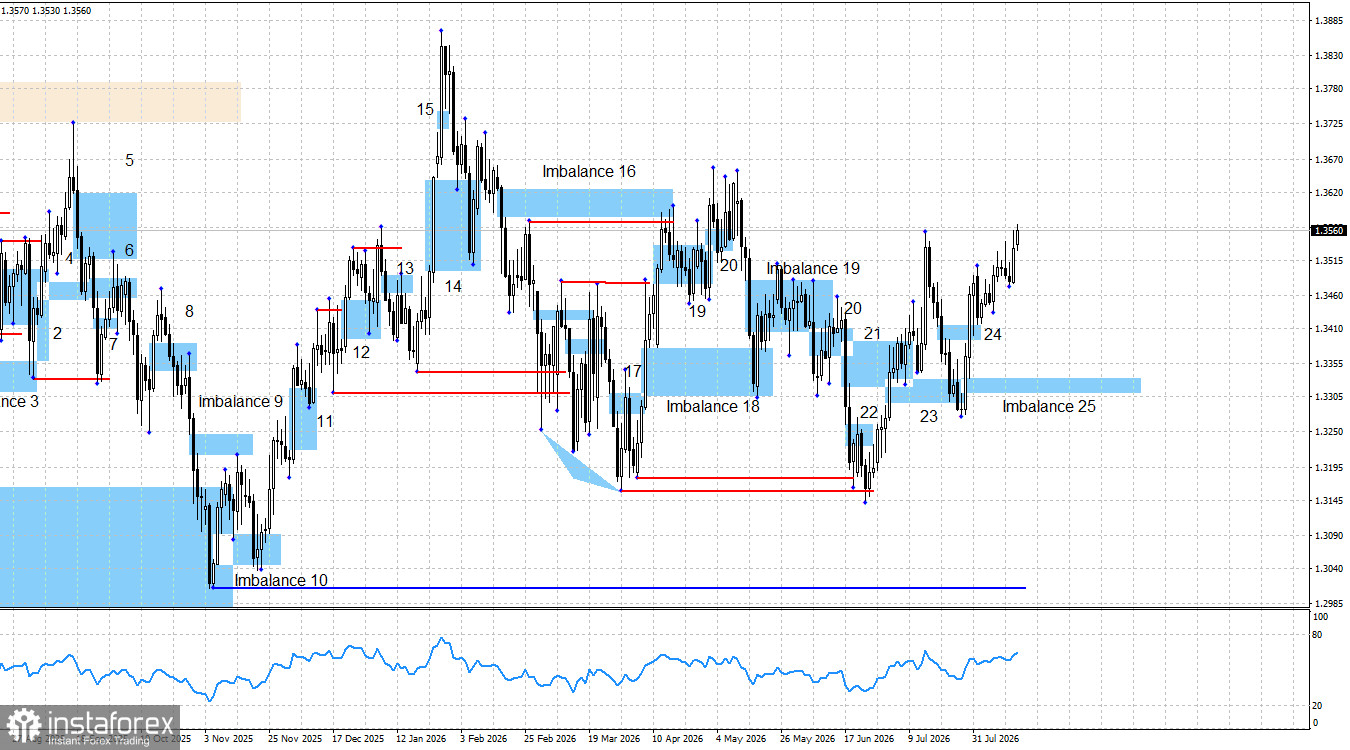
GBP/USD continues to rise, which I consider entirely justified. Reports on the US economy, labor market, and inflation have effectively settled the debate over whether the FOMC will raise interest rates in September. Nonfarm Payrolls declined for the fourth consecutive time and fell below zero. The US economy is slowing, while inflation is declining. The situation may change over time, but at present, the FOMC is much closer to maintaining a wait-and-see stance than to making hawkish decisions.
In recent weeks, the market has been actively discussing rumors that high inflation could force the Fed to raise interest rates. Kevin Warsh also spoke about excessive inflation that needs to be brought back to the target level. However, as I expected, inflation is not the only factor that matters to the central bank. The labor market is equally important to the FOMC, and its current condition cannot be ignored. Overall, the situation facing the Fed in August has become extremely difficult. Tightening monetary policy is not advisable, as it could cause the economy and labor market to weaken further. Yet waiting is not an ideal option either, as inflation could begin to accelerate again. Donald Trump is unwilling to make concessions to Iran, while Iran sees no reason to negotiate anything with Trump. The conflict continues, and the blockade of the Strait of Hormuz remains in place.
As I have already noted, geopolitics is no longer having a positive impact on the dollar, as negotiations between the US and Iran have effectively reached a dead end. Officially, Tehran is negotiating only with Oman. It remains unclear what these negotiations will lead to in terms of ending the conflict and reopening the Strait of Hormuz. Iran may be able to agree on terms for control of the Strait of Hormuz with Oman, but how would this resolve the conflict with the US and end the US blockade of the strait?
At the beginning of the new week, oil is trading at $91 per barrel. If the Strait of Hormuz remains closed, oil prices will continue to rise and retest the March–May highs. In this case, inflation in the US or the UK could begin to accelerate again. If the conflict is resolved, however, oil prices could return to the 60–70 per barrel range. In that case, further Fed tightening may not be necessary, while the Bank of England is currently not facing the problem of excessively high inflation. At present, however, it is the Fed that cannot commit to a hawkish move, while the Bank of England, by contrast, is prepared to tighten monetary policy if inflation begins to accelerate (although there are currently no signs of this). Thus, in my view, the pound even has a certain advantage.
The technical analysis shows a new bullish advance. Traders currently have two bullish imbalances (24 and 25), within which buying opportunities can be considered. Imbalance 24 has already generated a bullish signal that traders could have acted on. There are currently no bearish patterns. No liquidity sweeps have occurred recently. Therefore, traders currently have little choice but to keep their long positions open. Following Friday's strong rise, a new bullish imbalance could form as early as today.
There was no significant economic news on Monday, but bullish traders continued to advance nevertheless. In my view, this is how the market should behave, as I believe the bullish trend is recovering after the "geopolitical spring."
The overall fundamental backdrop remains such that, over the long term, I see little reason to expect anything other than further weakness in the US dollar. The war between Iran and the US has not changed this outlook. The possibility of a Fed rate hike in 2026 has not changed it either. Geopolitical developments caused the market to remember the dollar's safe-haven status for several months, but the conflict has already passed its active phase. The chances of FOMC monetary policy tightening have declined significantly in recent weeks, putting pressure on the US currency. Thus, in my view, any dollar strength is temporary and driven by short-term factors. I see no reason for a new bearish advance.
On August 18, the economic calendar contains seven reports, with the UK releases standing out from the overall list. The economic backdrop will influence market sentiment throughout Tuesday.
The long-term outlook for the pound remains bullish. After liquidity was swept from the two most recent swings, the bulls began an advance that is still underway. In the near term, I expect the pound to continue rising, as the probability of FOMC monetary policy tightening is currently extremely low. I see no basis for a bearish advance, as there are no bearish patterns. The bulls received a buy signal from Imbalance 24, which remains valid. The target for further gains in the pound is the May 1 high at 1.3656, which is approximately 100 points away. The 1.3557 swing should be monitored closely, as liquidity could be swept from this level. If this occurs, the pair could reverse in favor of the US dollar and experience a decline.


