
Veja também


 17.08.2026 03:36 PM
Slow and steady wins the race. That proverb seems to fit the US dollar in recent days: it didn't collapse in one go but quietly slid to a three-month low. The USD index is down for the third session in a row, and the reason is classic — the market stopped believing in a federal funds rate hike.
Traders have cut the odds of tighter monetary policy in September to one in three, whereas at the end of July they exceeded 75%. Weak employment and inflation data for July, plus unexpectedly sluggish retail sales, stripped the US dollar of its main argument — confidence in its own strength.
Fed funds rate outlook
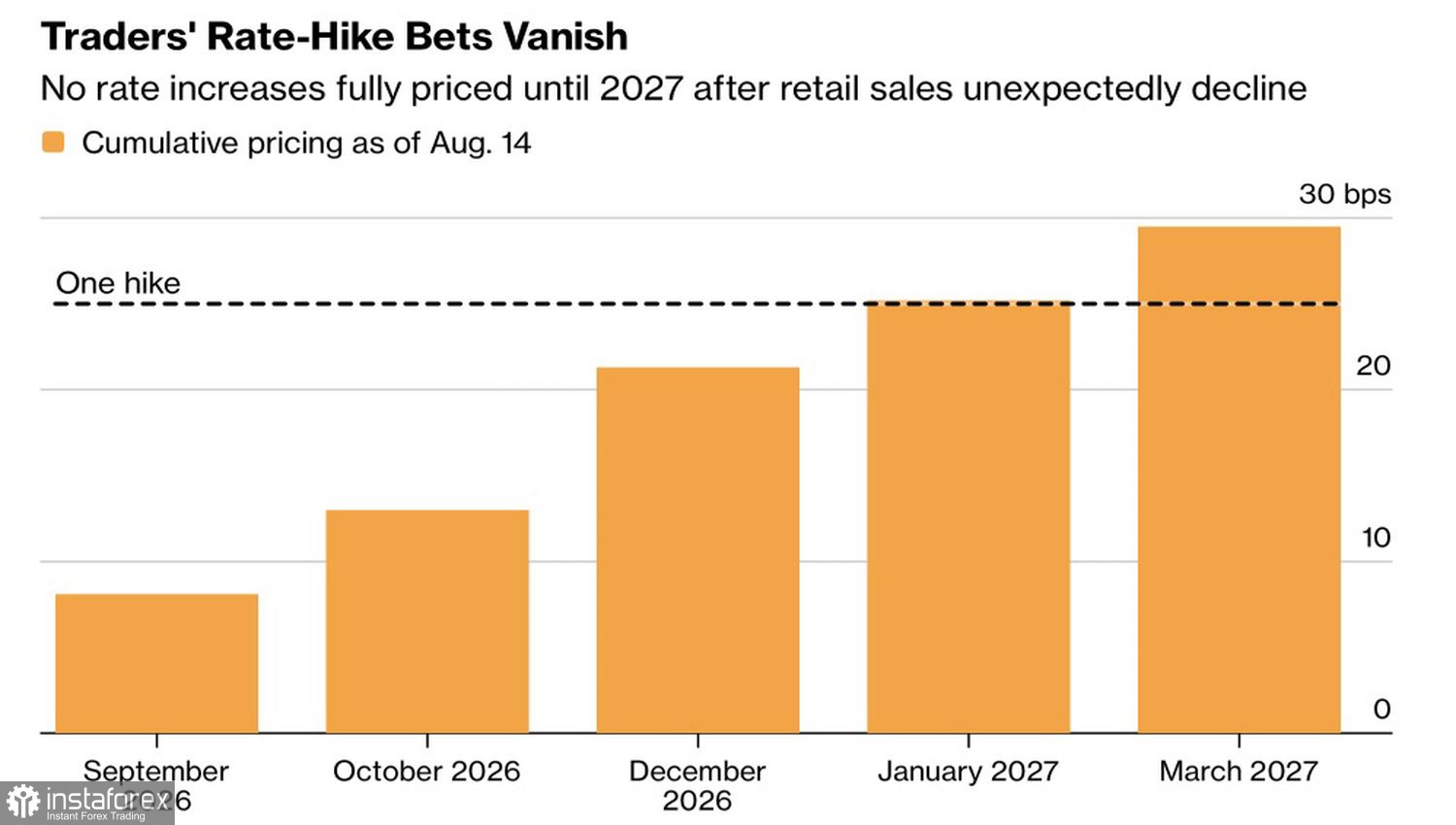
But it's too early to bury the greenback. Brown Brothers Harriman believes stronger data could restore the dollar's shine if it confirms the US economy's growth advantage. There are enough potential catalysts this week: the minutes of the July FOMC meeting come out on Wednesday and global PMI prints on Friday. ING warns that it will be difficult for the market to return to a bullish stance on the USD if the FOMC minutes hint that the rate-setting committee is poised to keep interest rates unchanged going forward.
The futures market is skeptical: monthly contracts have turned against the US dollar for the first time since late February, although longer-dated contracts still retain optimism. HSBC bluntly says the road ahead for the greenback promises to be bumpy.
Oil used to support the USD index, but that pillar has also wobbled — Brent is stuck in the $80–90 range. In fact, supplies from the Middle East are much larger than commonly thought. Tankers are quietly transshipping barrels in the Gulf of Oman, bypassing the formally closed Strait of Hormuz, and, sources say, volumes exceed market estimates by some 4 million b/d. US Energy Secretary Chris Wright put transit through Hormuz at 9 million b/d — nearly half of the pre-crisis level of 20 million b/d. This quiet logistics has spared markets the shock that had been feared if the Iran conflict escalated.
Inflation depends on oil, inflation determines rates, and rates determine the fate of EUR/USD. Goldman Sachs Research forecasts US GDP growth of 2.1% in Q4 2026, unemployment finishing the year at 4.4%, and the Fed keeping the policy rate at 3.5–3.75% through year-end. The eurozone is expected to grow a modest 0.8%, but Goldman sees the ECB still adding 25 basis points in September, taking its rate to a peak of 2.5%, with risks tilted toward further tightening.
That creates an interesting fork: the Fed pauses while the ECB continues higher. The divergence would seemingly favor the euro. But will the market believe it before Wednesday and Friday?
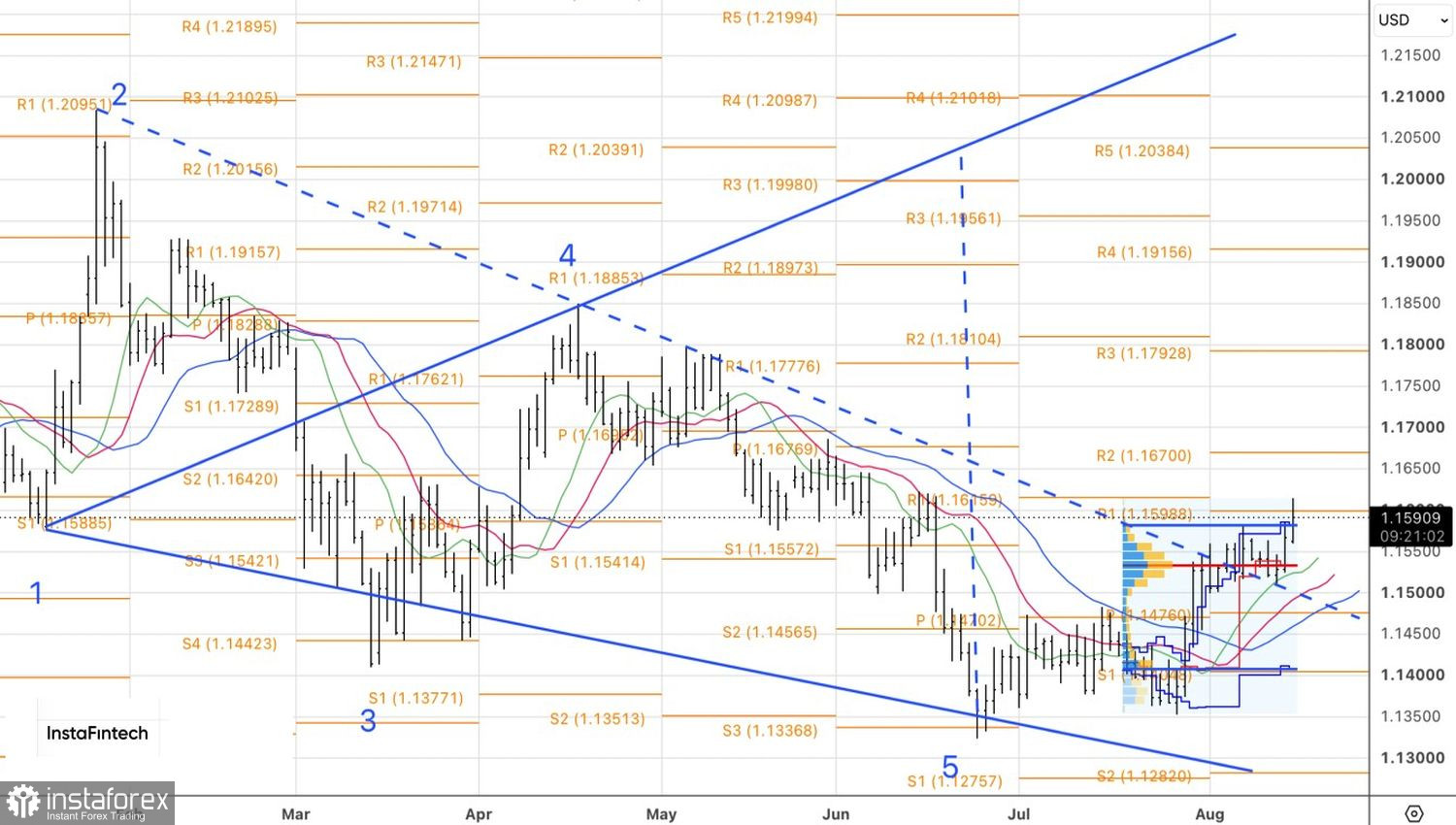
Technically, on the daily chart, EUR/USD is continuing to play out a Wolfe Wave pattern with targets above 1.200. A close above the upper band of the fair-value range (1.141–1.158) would allow adding to long positions opened from 1.154.


