
Vea también


 25.09.2026 06:54 AM
Over the past few days, CFTC Chair Michael Selig has been a frequent presence in the headlines. Selig has said bluntly that the agency will not wait for the CLARITY Act to pass and will begin using its existing statutory powers to build a regulatory regime for the crypto market now. He reinforced that stance on social media, saying it's time to act because the president promised clear rules for crypto — and the CFTC is implementing them.

The causal link is straightforward: the failure of the procedural vote on the CLARITY Act in the Senate effectively closed the path to a legislative solution in the near term, and the CFTC under Selig had been preparing for exactly this scenario. As early as late August, the chair ordered staff to explore ways to solidify a crypto market framework under current statutory authority rather than wait on Congress. Last week, the agency sent two concrete rule packages to the White House for review — a rule for crypto transactions and a rule for crypto asset markets. It is notable that work on these drafts began before the vote failed, which suggests the agency executed a premeditated contingency plan rather than reacting after the fact.
Selig has also outlined a far broader agenda of change. The CFTC is preparing regulation for a future in which financial markets operate on-chain 24/7 and trading is increasingly automated via algorithms and AI agents — a reality that requires a fundamental rethink of existing rules and standards. In earlier remarks, he described tokenization as a technology capable of transforming asset classes the way electronic trading once transformed traditional markets, enabling near-instant settlement and real-time collateral movement.
He argues that stablecoins will play a key role in that on-chain financial infrastructure, and that cryptocurrencies and precious metals could be ready for around-the-clock trading. Large exchanges and platforms that can adapt quickly stand to be the first beneficiaries of 24/7 markets and the new regulatory category.
Notably, the SEC has moved in parallel. On September 17, the commission, led by Chair Paul Atkins, issued an "innovation exception" — a temporary five-year relief permitting approved trading venues to offer tokenized versions of nationally listed US stocks via automated market makers and liquidity pools. The rule grants those trading venues an exception from the statutory definition of an "exchange," and it relieves liquidity providers in such pools from the definition of a "dealer," effective through September 17, 2031. Atkins tied the move directly to the CLARITY Act's failure, saying the SEC is taking significant steps under existing statutory authority to migrate parts of US capital markets to the digital era while Congress remains stalled.
The causal logic mirrors the CFTC story: with no timely Senate compromise on jurisdictional boundaries, both agencies moved administratively in their respective remits. The SEC relied on its existing exemption mechanism under Exchange Act section 36(a)(1), while the CFTC is preparing a new registration category for crypto exchanges. However, both initiatives aim at the same goal: provide market participants legal certainty where Congress could not.
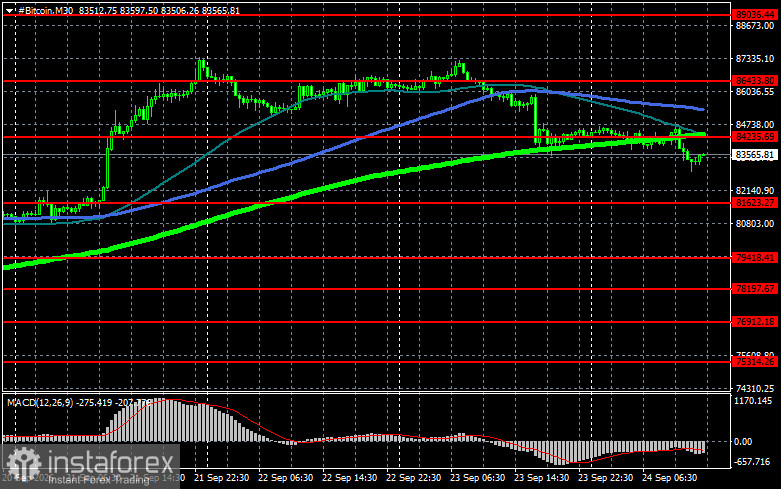
Bitcoin technical outlook
Buyers are targeting a return to $84,200, which would open a direct path to $86,400 and then toward $89,000 — a breach of which would signal attempts to return to a bull market. On the downside, buyers are expected around $81,600. A drop below that level could quickly take BTC toward $79,400, with a further target near $78,100.
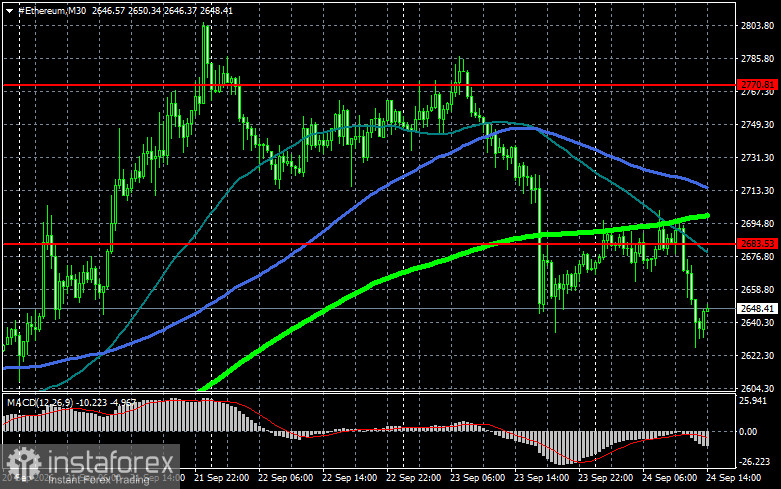
Ethereum technical outlook
A clear hold above $2,683 would open a direct route to $2,770, with a longer target near $2,872. A break above that level would confirm strengthening bullish sentiment and renewed buyer interest. On the downside, buyers are likely around $2,578. A break below that level could push ETH toward $2,486, with a further target at $2,433.
Chart key:
Crosses of, or tests against, moving averages typically act as pauses or trigger fresh market momentum.


