
Veja também


 08.09.2026 11:50 AM
Time is running out, midterm elections are approaching, and Donald Trump urgently needs a compelling reason for American voters to back Republicans. Traditionally the incumbent party loses midterms—voters typically grow disappointed with a new administration after a year or two in office. Sometimes the disappointment concerns specific promises or policies, but in Trump's case the effects of his policies are so transparent that it is unlikely many voters will now support Republicans.
That does not mean individual Republicans will not win local contests against Democrats, but Democrats should generally hold the advantage. Trump dislikes that scenario, but he cannot materially improve his party's ratings at this point. The conflict with Iran has stalled with no way to reduce fuel prices without massive subsidies; the national debt has topped $40 trillion; prices are rising at home; the Fed cannot raise rates because Trump demands cuts; and a year-and-a-half-long trade war is hitting Americans' wallets.
Against this backdrop, Trump urgently needs a victory he can present to voters. Since a successful outcome in Iran is out of reach, he must find another one. That brings the Ukraine-Russia conflict into focus—a war he once promised to end in 24 hours if elected. The promise has stretched into 18 months, but the White House has renewed efforts. In recent days a US delegation has visited Moscow and Kyiv seeking a settlement and to bring the parties to a peace agreement. So far neither Kyiv nor Moscow has accepted Washington's proposals. Trump persists, claiming he wants the war ended before the end of 2026.
I do not know how realistic that goal is, and it is clear the effort is aimed primarily at restoring the image of Trump, the peacemaker that he cultivated last year. If the president can broker a Ukraine-Russia deal, it would be a major political victory likely to boost his approval ratings ahead of the midterms.
Read also:
Analysis of EUR/USD on September 8. Market is in no rush and awaits key data
Wave analysis of EUR/USD
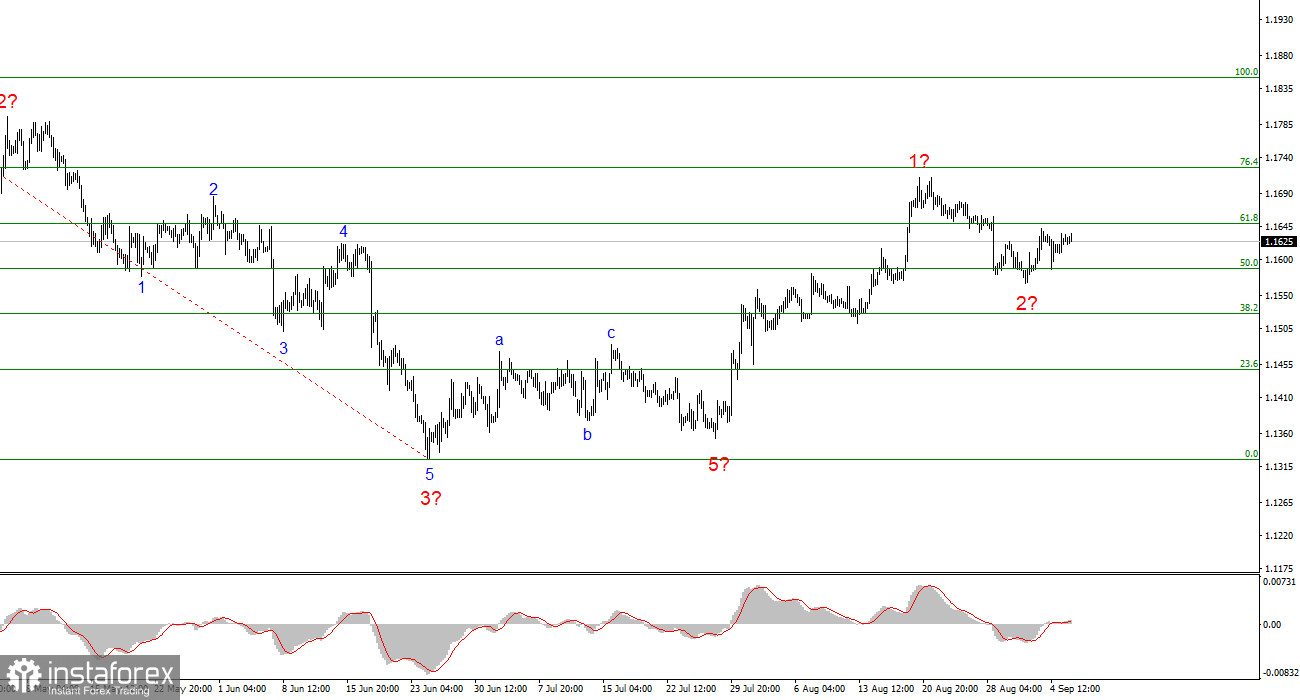
Based on my EUR/USD analysis, I conclude the instrument remains within a local bullish segment—the first wave of a new broader uptrend. Admittedly, the trend that began in January could evolve into an A-B-C-D-E structure; if that alternate scenario plays out, declines would resume toward targets below wave C's low at 1.1325. I treat that as an alternative. My base view is that a new extended bullish segment began in June that will carry the euro toward the 1.20 area and significantly beyond.
Wave analysis of GBP/USD
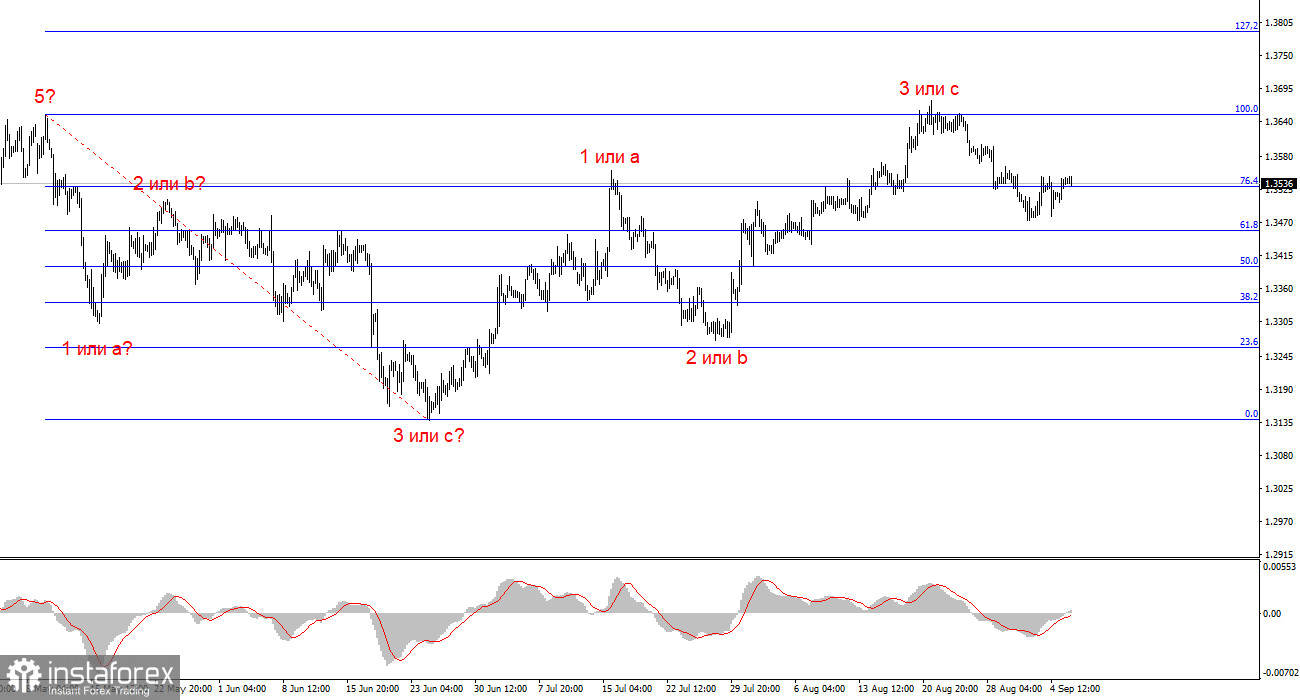
The wave structure for GBP/USD is reasonably clear but could become more complex. Charts show a completed A-B-C corrective structure, so I expect an impulsive upward wave sequence. However, uncertainty in the EUR/USD count leaves open the possibility of a five-wave down move in the euro, which would likely drag GBP/USD toward the 1.31 area and require revising the pound's wave labels. For now, that remains a reserve scenario.
Core principles of my analysis
1) Wave structures should be simple and coherent; complex structures are hard to trade and often change.
2) If you lack confidence in market direction, it is better to stay out.
3) There is never 100% certainty about direction—always use protective stop-loss orders.
4) Wave analysis can be combined with other analytical methods and trading strategies.


