
یہ بھی دیکھیں


 08.06.2026 09:44 AM
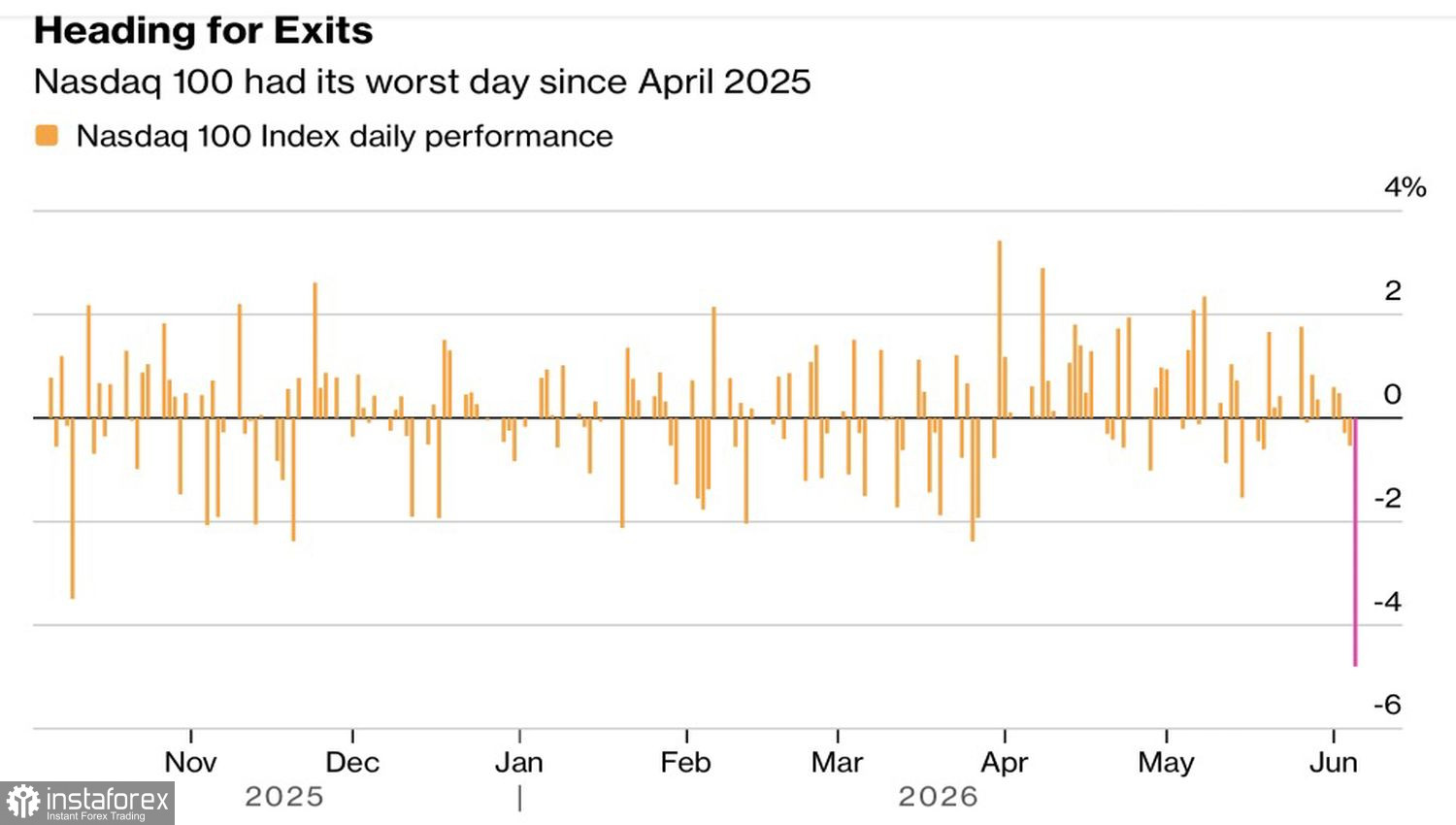
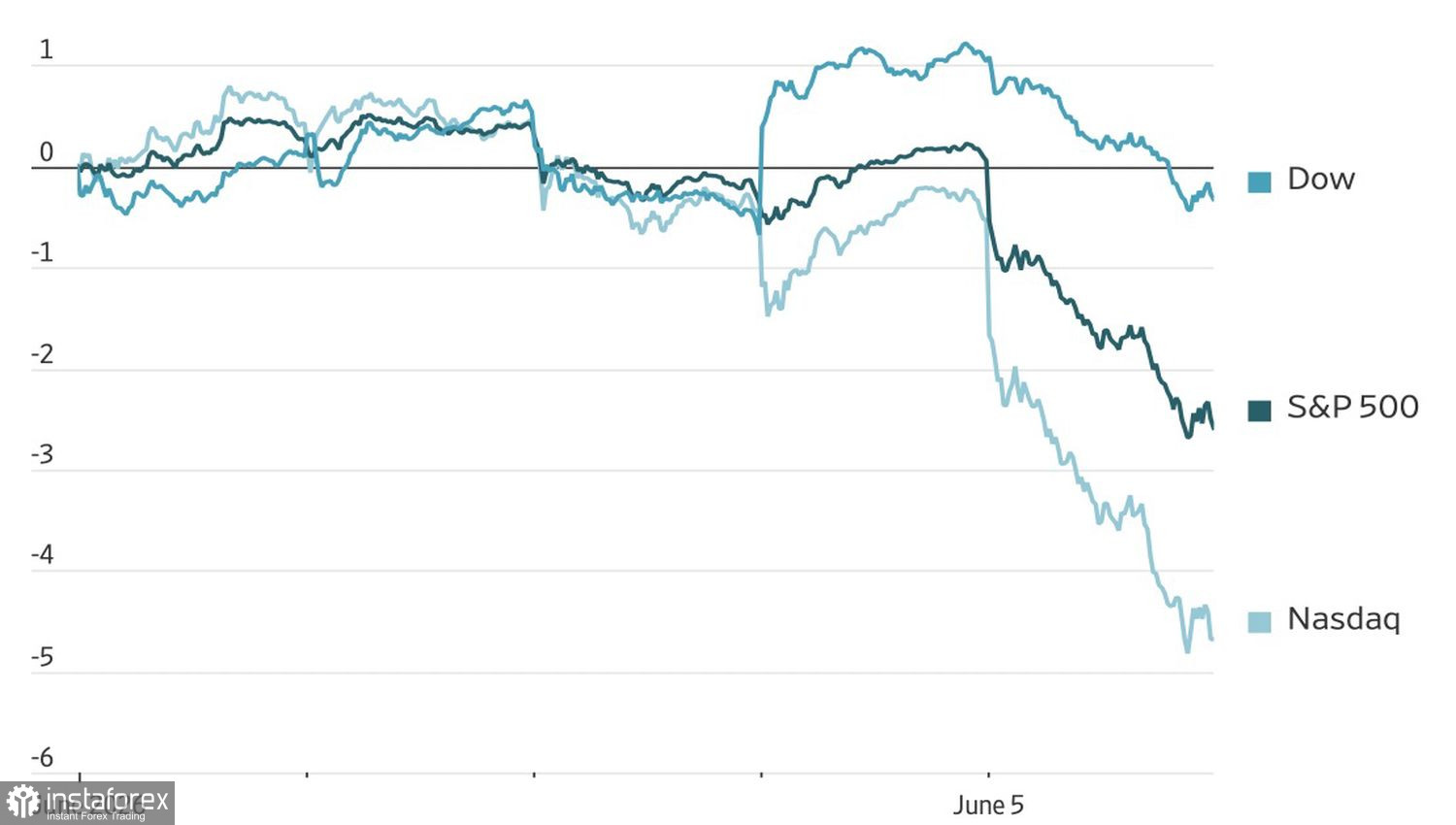
An impressive US jobs gain of 172k in May, together with unemployment holding steady at 4.3%, pushed Treasury yields higher and slammed stock indices. The Nasdaq Composite posted its worst daily and weekly performance in more than a year; the S&P 500 failed to replicate its record-length streak in 1985; and the Philadelphia Semiconductor Index lost about $1 trillion in market capitalization.
Nasdaq Composite performance
The main driver was the rise in the probability of Fed tightening in 2026 to 76%. The futures market puts the odds of two federal funds rate hikes at roughly one in three. When the S&P 500 rally rests on strong corporate earnings, capital outflows from the crypto market, and low sensitivity to geopolitics and interest rates, the removal of any one element can cause the whole structure to fall apart.
The poor performance of US stocks drew the anger of Donald Trump. In his view, when the US economy is showing strength, the stock market should be rising, not falling. Investors were spooked by rumors of Fed rate hikes, but he argues rates should actually be cut, since strong economic growth does not necessarily mean high inflation.
Alas, Trump's remarks failed to move the S&P 500. The oil market has responded more to White House rhetoric than the stock market. Brent rose on news of escalation in the Middle East — mutual strikes by Iran and Israel — but the rally was modest. North Sea crude bulls were restrained by optimistic comments from the US president about a supposedly near-final agreement between Washington and Tehran.
US stock indices dynamics
The oil market is easy to understand: investors are tired of the Middle East conflict and know that wars sooner or later end with peace deals. Stocks see things differently.
The S&P 500 rose for a long time thanks to impressive corporate profits and enthusiasm around AI and chip makers. As a result, based on Wall Street analysts' fundamental estimates, the broad index could still jump another 29% by the end of 2026 — the best annual upside since the 1990s, and more bullish than most bank and investment firm forecasts.
By contrast, Wall Street macro strategists expect the S&P 500 to rise only about 3% by year-end. Current prices do not fully reflect geopolitical risks, high inflation, and weakening consumer sentiment.
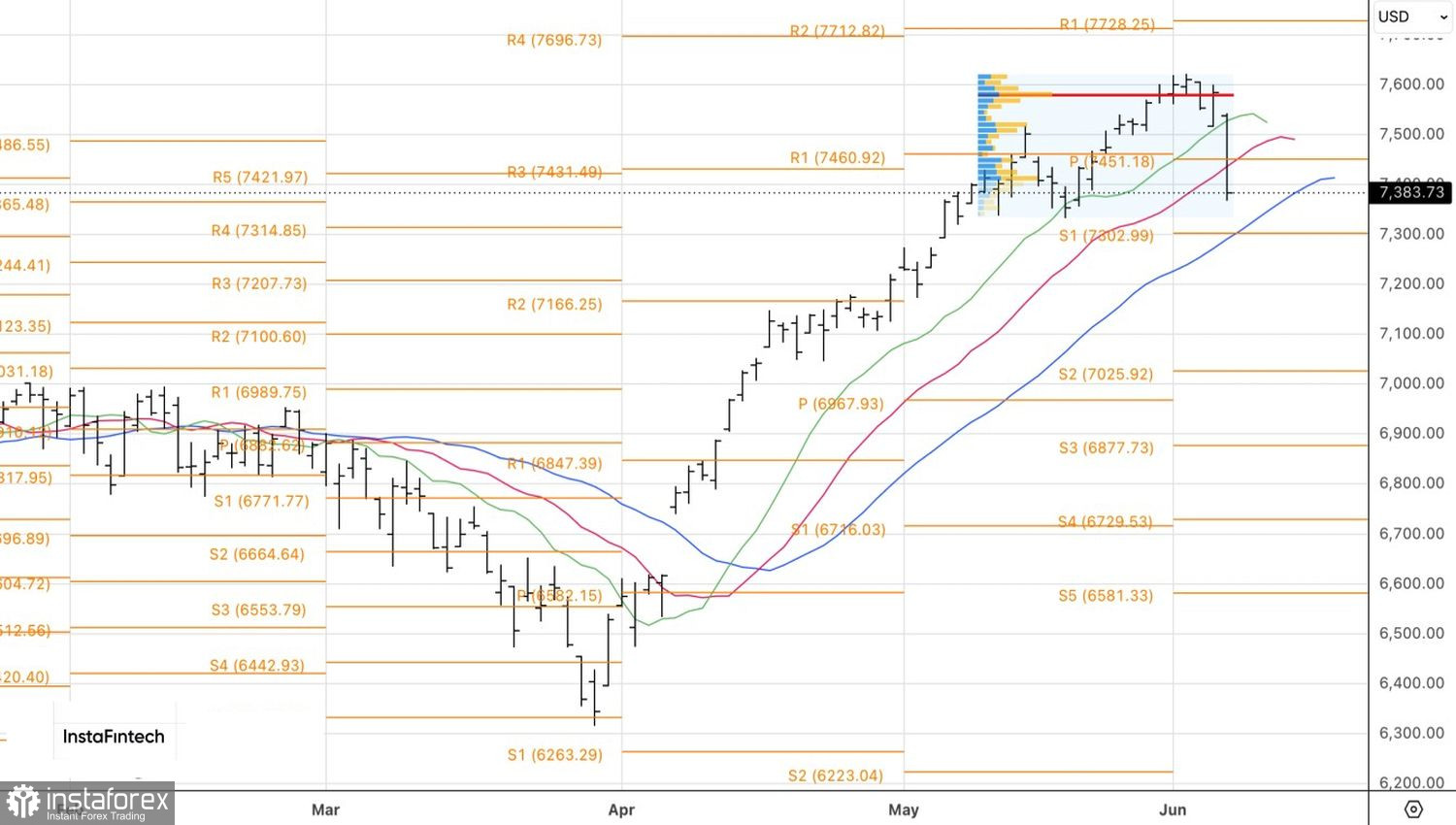
Technically, on the daily chart, the S&P 500 is pulling back toward the uptrend. Only a rally above resistance at 7,460 would justify a return to buying. For now, note the increased risk of a correction toward 7,300 and 7,200. A bounce off those levels would be a reason to establish longs.


