
یہ بھی دیکھیں


 06.05.2026 08:17 AM
The US dollar has come under pressure due to several factors, leading to increased demand for riskier assets. However, caution is warranted regarding the current decline of the dollar.
Yesterday, the dollar was under pressure following weak data from the ISM services sector business activity index for April, which was revised downward. The decline in the ISM index was an unpleasant surprise for traders who expected a continuation of past trends toward expanding business activity. The slowdown in the sector's growth may have been caused by various factors, including ongoing inflationary pressures that force consumers to cut discretionary spending and general economic uncertainty.
Today, important economic indicators are expected in the first half of the day that could significantly impact financial markets. In particular, data on the services sector PMI for the Eurozone, the composite PMI index, and figures for the producer price index will be published. These indicators are key for assessing economic activity in the Eurozone and can provide insight into current trends and future prospects.
The services sector PMI is one of the most closely monitored indicators reflecting business activity in this sector. Values below 50 indicate a slowdown or contraction, which is negative for the economy and the euro. The composite PMI, which combines data from the manufacturing and services sectors, will provide a broader picture of the Eurozone's economic condition. Its dynamics will help understand which sectors are demonstrating greater resilience and which are under pressure.
Data on the producer price index is also important. This indicator reflects inflationary pressures at the production stage and can serve as a leading indicator for consumer inflation. Deviations from expected PPI values can influence expectations regarding the European Central Bank's future policies.
As for the pound, this morning is also shaping up to be eventful. The focus remains on the services sector business activity index and the composite index reflecting the state of both the services and manufacturing sectors. This data is not just statistical reports; it is a barometer of the current state of the British economy and its prospects. Strong values for the services sector PMI, which is the main driver of growth for the British economy, could serve as a catalyst for further strengthening of the British pound.
If the data meets economists' expectations, it is better to act based on a Mean Reversion strategy. If the data is significantly above or below economists' expectations, a Momentum strategy is preferable.
Buy on a breakout at 1.1749 could lead to an increase in the euro to around 1.1767 and 1.1784;
Sell on a breakout at 1.1723 could lead to a decline in the euro to around 1.1701 and 1.1678;
Buy on a breakout at 1.3598 could lead to an increase in the pound to around 1.3627 and 1.3654;
Sell on a breakout at 1.3567 could lead to a decline in the pound to around 1.3539 and 1.3514;
Buy on a breakout at 156.73 could lead to an increase in the dollar to around 157.05 and 157.40;
Sell on a breakout at 156.33 could lead to a sell-off of the dollar to around 155.96 and 155.56;
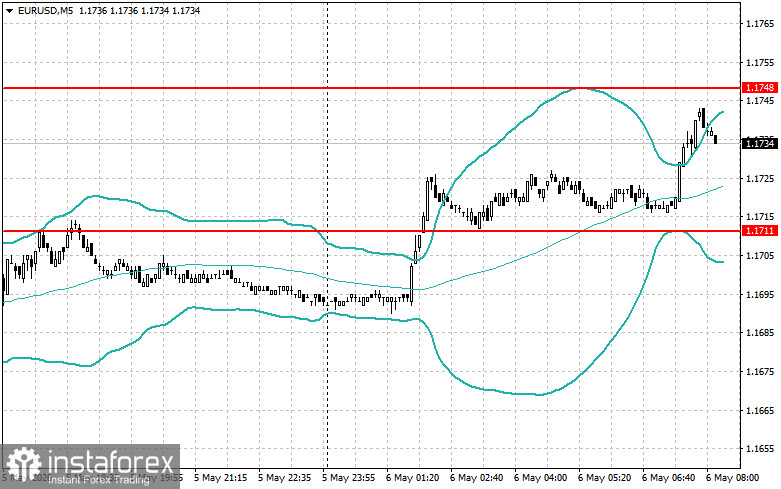
Look for short positions after a failed breakout above 1.1748 on a return below this level;
Look for long positions after a failed breakout above 1.1711 on a return to this level;
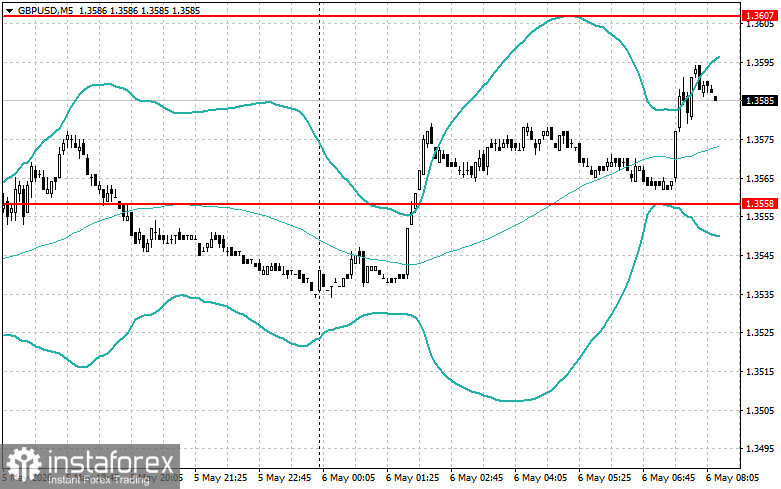
Look for shorts after a failed breakout above 1.3607 on a return below this level;
Look for longs after a failed breakout above 1.3558 on a return to this level;
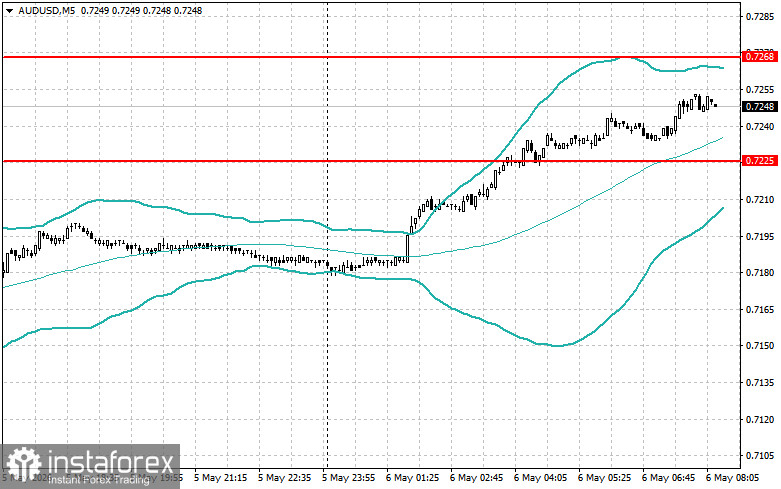
Look for shorts after a failed breakout above 0.7268 on a return below this level;
Look for longs after a failed breakout above 0.7225 on a return to this level;
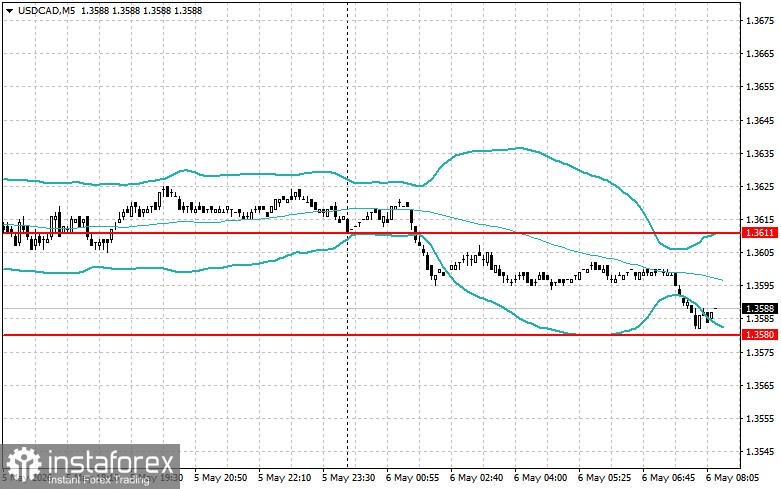
Look for shorts after a failed breakout above 1.3611 on a return below this level;
Look for longs after a failed breakout above 1.3580 on a return to this level;


