
یہ بھی دیکھیں


 26.03.2026 10:06 AM
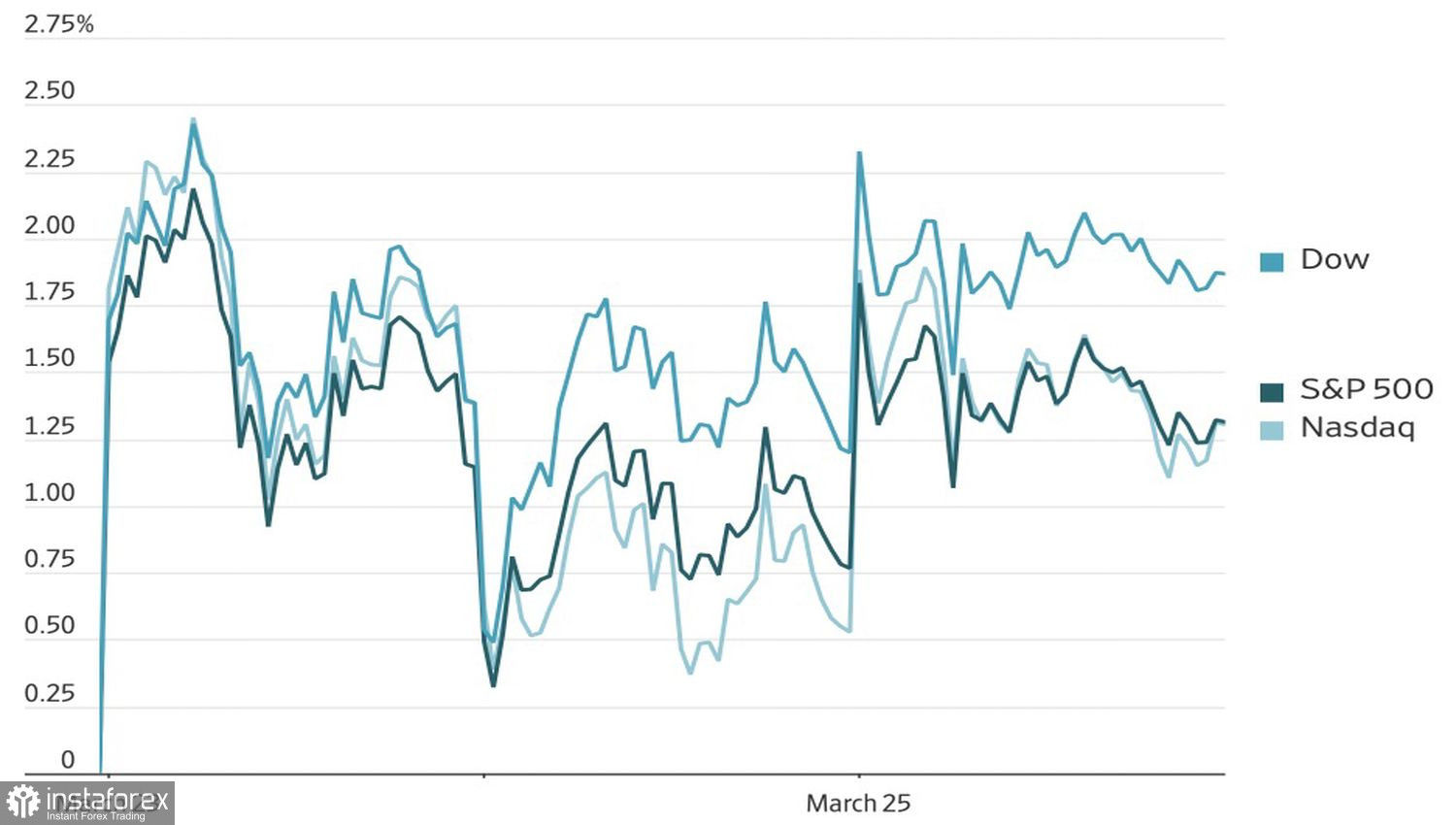
The market stubbornly refuses to fall despite troubling headlines from the Middle East. Iran rejected the US plan and put forward its own ceasefire conditions. Tehran demands recognition of its authority over the Strait of Hormuz, guarantees against repeat attacks by the coalition, and compensation for damages. The White House threatens to flatten it if talks do not occur. Nevertheless, the development of an S&P 500 correction is being delayed.
Performance of US equity indices
Let geopolitics remain a short-term driver of the broad index, but corporate earnings will continue to exert the primary influence over a longer investment horizon. Morgan Stanley expects earnings to grow 20% over the next 12 months. Historically, numbers of this magnitude have only been recorded when the US economy was emerging from a recession on the back of a low base effect.
Wall Street analysts estimate S&P 500 companies will increase earnings by 11.9% in January–March. Before the Middle East conflict, the consensus stood at 10.9%. Remarkably, the estimate has risen despite elevated geopolitical risk.
Earnings forecasts for S&P 500 companies
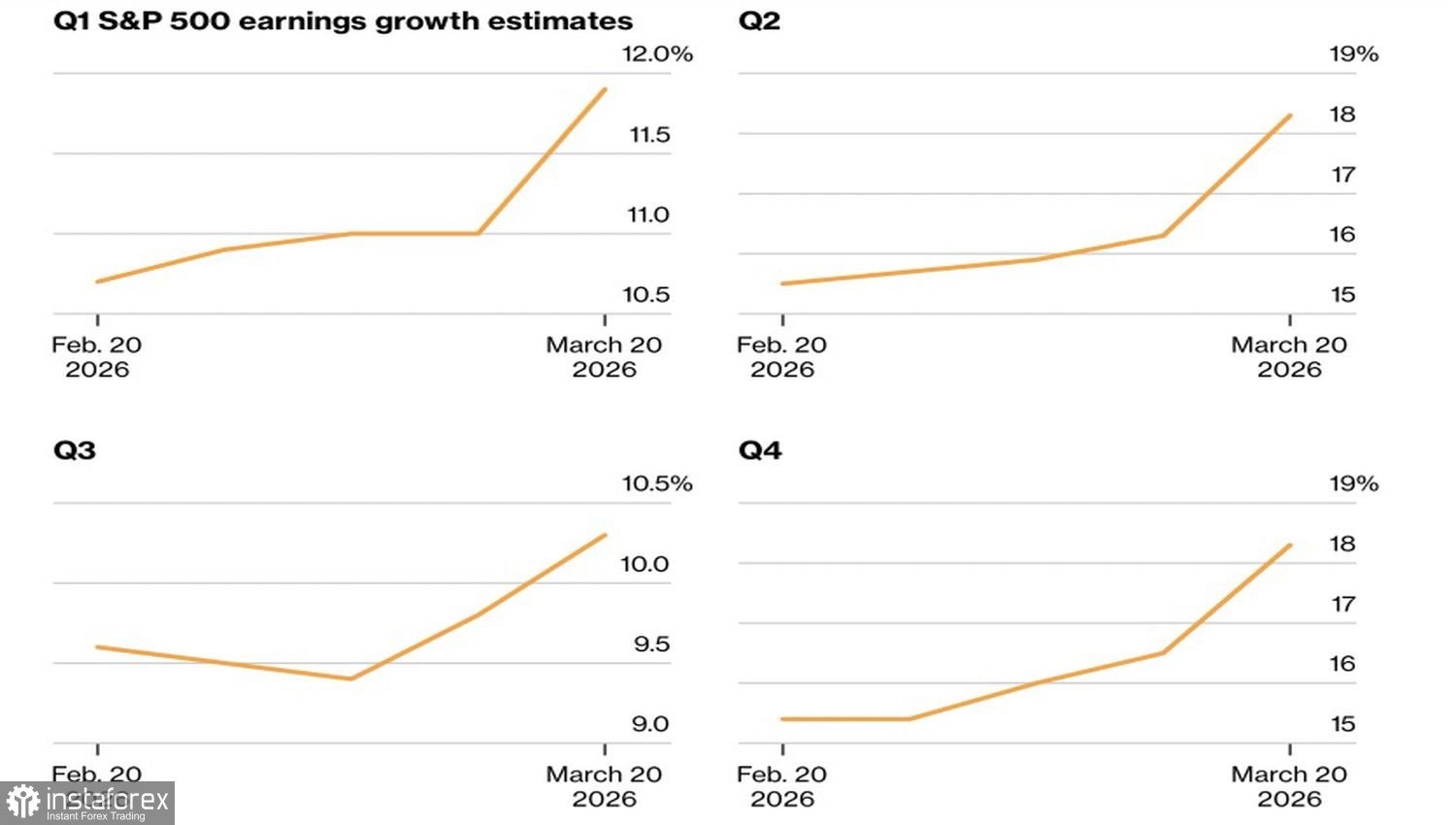
Morgan Stanley notes that Wall Street analysts have raised earnings forecasts even while US equities have fallen. That combination is rarely seen during spikes in geopolitical tension. Still, JP Morgan warns that if Brent rises to $110 per barrel and stays above that level for an extended period, S&P 500 earnings estimates would fall by 5 percentage points.
The resilience of the broad index is driven in part by the US president's strong desire to create that stability. The White House continues to insist it is negotiating, without specifying with whom. Iran snidely replies that it is negotiating with itself. Nevertheless, Donald Trump has so far managed to sustain the crowd's optimism.
Nationwide claims the current S&P 500 dynamics prove that retail investors continue to buy the dips. Good news from the Middle East would prompt smart money — large institutional investors — to step back, which would drive the broad index higher.
Thus, in the US equity market, there is no clear dominance of fear over greed. Investors are sitting on pins and needles waiting for favorable news from the Middle East. If it comes, positive earnings expectations will inspire the crowd to action and push the broad index up.
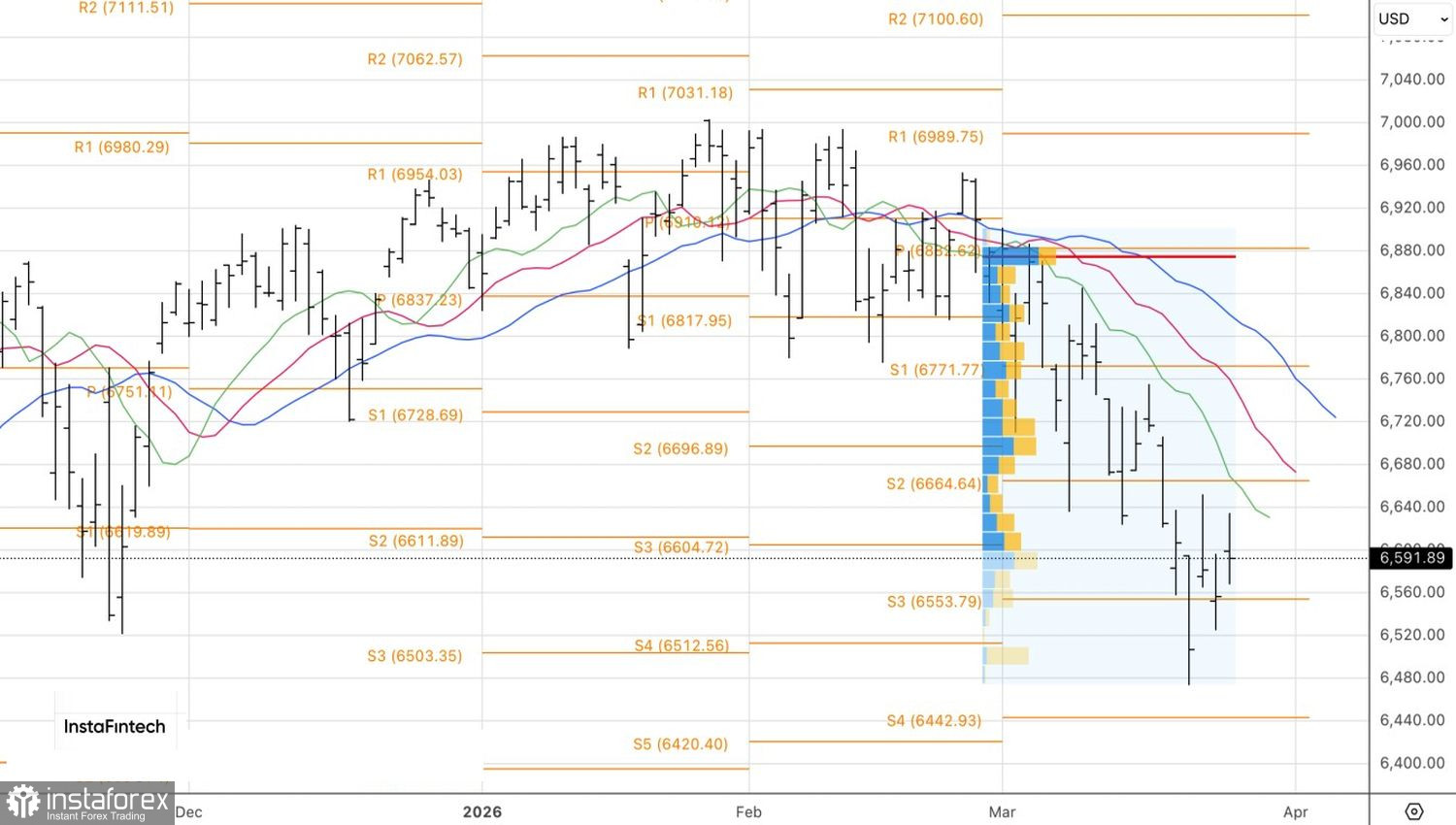
Technically, on the daily S&P 500 chart shows consolidation within the Ross hook pattern. A drop below the support levels of 6,550 and 6,525 could provide the basis for selling. It makes sense to return to buy entries above 6,635 and 6,650.


