
See also


 20.04.2026 12:18 PM
The euro, the pound sterling, and other risk assets plunged sharply after tensions in the war spiked over the weekend. The US Navy opened fire and boarded a cargo ship flying the Iranian flag in the Gulf of Oman — the first seizure of a vessel under the US blockade of the Strait of Hormuz. The incident, in one of the world's most critical trade corridors, instantly triggered a wave of fear and uncertainty across financial markets.
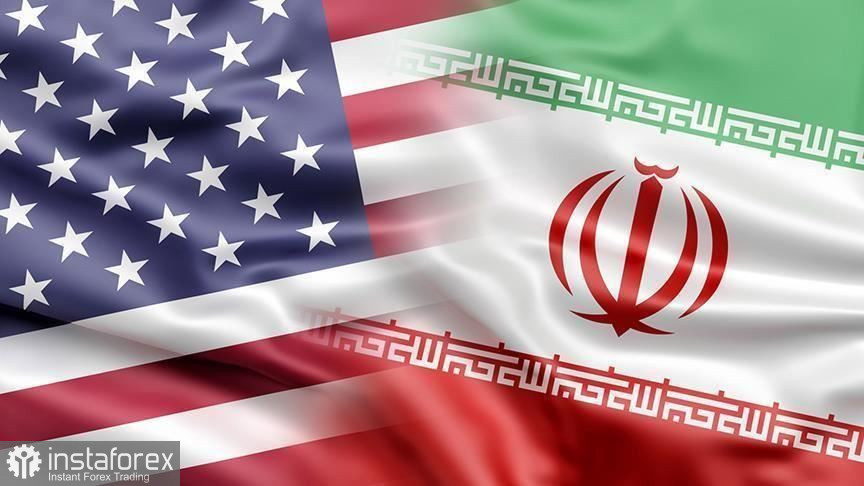
Donald Trump and Iranian officials offered conflicting statements about the next phase of the conflict, creating uncertainty over whether peace talks between the two sides will take place as the ceasefire agreement is due to expire in the coming days. The leaders' differing declarations underline deep disagreements and complicate efforts to establish constructive dialogue. Markets, sensitive to geopolitical instability, read these events as a sign of potential escalation, prompting a sharp capital outflow from risk assets.
The drops in the euro and the pound, along with other risk-sensitive currencies, are a direct consequence of heightened concern. Traders are shifting funds into safer havens such as the US dollar and gold, while awaiting further developments. The expiration of the ceasefire without signs of its extension or a new compromise only adds to the nervousness and sets the stage for further pressure on risky assets.
Trump, who on Friday said a deal with Iran was nearly agreed, on Sunday threatened to destroy all power plants and bridges in Iran if talks fail. Iranians deny making concessions on a number of points the US president said are part of the plan, including ending their nuclear program and handing over stocks of enriched uranium to the United States.
Navigation in the Strait of Hormuz has now come to a complete halt, and coupled with uncertainty over US?Iran diplomacy, this is weighing on financial markets. It also remains unclear whether Iranian and US officials will meet in Islamabad, Pakistan, before the fragile 14?day ceasefire expires on Tuesday. Vice President J.D. Vance, special envoy Steve Witkoff and the president's son?in?law Jared Kushner are due to fly to Islamabad Monday evening for talks on Tuesday.
Trump recently said he sees a chance for a deal, but the Iranians have denied that, stating there are no clear prospects for an agreement. Iran also denies participating in talks with the US in Islamabad.
Weekend events have demonstrated the unpredictable nature of the war and the diplomatic efforts to end it. Israel continues operations in Lebanon despite last week's announced ceasefire, adding further pressure on risk assets.
EUR/USD
Buyers should be thinking about taking the 1.1765 level. Only then can they target a test of 1.1790. From there, a move to 1.1830 is possible, though doing so without support from large players would be difficult. The further target is 1.1850. On a decline, I expect serious buying interest only around 1.1730. If no one shows up there, it would be prudent to wait for a new low at 1.1700 or to open long positions from 1.1680.
GBP/USD
Pound buyers need to take the nearest resistance at 1.3515. Only that will open a path to 1.3550, above which a breakout will be difficult. The farther target is the 1.3585 area. On a drop, bears will try to seize control at 1.3475. If they succeed, a break of the range would deliver a serious blow to bulls and push GBP/USD down toward 1.3450 with a prospect of reaching 1.3415.


