See also


 18.11.2025 08:43 AM
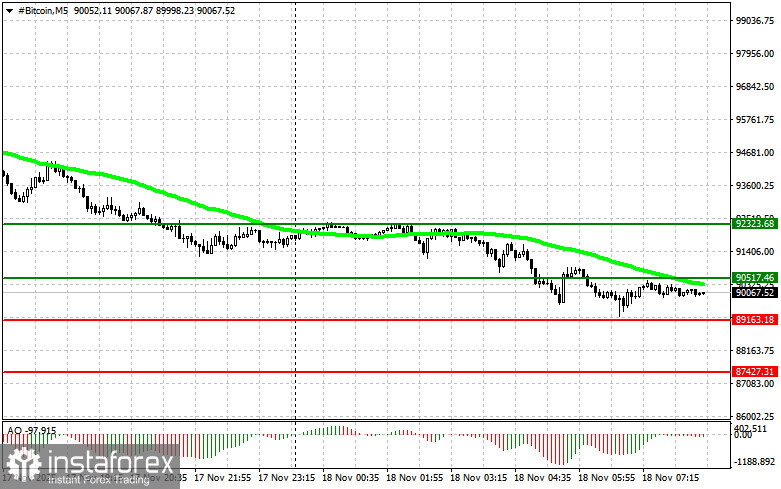
Bitcoin has fallen below $90,000, and interestingly, there are still no major buyers at these levels. Ethereum also fell below $3,000 yesterday.

The absence of buyers is not surprising. Retail players have been under pressure from large sell-offs, and medium-term buyers who accumulated at an average price of $100,000–$102,000 are also facing significant challenges. Against this backdrop, it is not surprising that from November 10 to 14, spot Bitcoin ETFs recorded a net outflow of $1.1 billion, while spot Ethereum ETFs lost over $729 million.
Undoubtedly, this trend raises concerns in the market. Traders are likely reassessing their strategies amid the significant downturn in the cryptocurrency market. Additionally, the overall macroeconomic uncertainty related to the monetary policy of central banks and inflation puts additional pressure on risk assets, including cryptocurrencies.
It is worth noting that the outflow from ETFs can be attributed to various factors, from profit-taking after recent price increases to reallocating capital to other asset classes—such as gold, which is currently offering much higher returns.
In the near term, the further dynamics of the cryptocurrency market will largely depend on the development of the macroeconomic situation and the return of new money to spot ETFs. It is possible that if markets stabilize and fundamental indicators improve, we might see a return of buyers and a resumption of price growth by the end of the year. However, under current conditions, the risks of a correction remain quite high.
Regarding intraday strategies in the cryptocurrency market, I will also rely on significant pullbacks of Bitcoin and Ethereum in anticipation of the continuation of the bullish market in the medium term, which has not disappeared.
As for short-term trading, the strategy and conditions are outlined below.